Research

One of the leaders of the largest professional society of scientists and engineers in China – who has an interesting historical connection to Colorado School of Mines -- paid a visit to the university Feb. 19.

Dr. Cheng Donghong, vice president and executive secretary of the China Association for Science & Technology (CAST), toured campus labs and met with faculty, staff and students at Mines before giving a talk regarding the activities of her organization.

Dr. Cheng, who has studied physics and has a doctorate in science education, is the descendant of a 1914 graduate of Mines. Her grandfather earned degrees in mining and mechanical engineering and eventually returned to China to make important contributions to mining.

CAST, which is the Chinese counterpart of the American Association for the Advancement of Science, is responsible for promoting public science education and scientific research in the largest country in the world.

For more information on CAST, see the organization’s website.

As it’s often said, the real world can be the best classroom. That’s precisely the idea behind an assignment students in Teaching Professor Chuck Stone’s ENGY 320 Renewable Energy course received: to individually design their own field trips to companies or organizations involved in renewable energy or sustainability and come back with a report.

“It was wide open,” said Stone as students showed off their posters and reports during the Forum on Renewable Energy at Colorado School of Mines, Dec. 6. “If I had told them what to do we wouldn’t have this depth and breadth of projects here. I was incredibly impressed with the variety and creativity.”

The field trips took students from solar companies to train stations and even elementary schools.

Senior Katherine Bony contacted engineers at Wheat Ridge based Major Geothermal learning how engineers at the company access heat energy from below the earth’s surface.

“I learned all about the different types of geothermal [systems]. I originally thought there was only vertical, but there’s horizontal, there are slinky loops. It all depends on the thermal conductivity of the ground,” said Bony.

Bony’s experience also led to an internship opportunity with the company.

Senior Kristen Heiden reported on her experience working with civil engineers working on the LEED certification for the Union Station redevelopment project in Denver.

“What I think is really neat is Union Station has a big waste management system,” said Heiden. “They use waste material to help in the construction, but they also recycle a lot of it.”

Heiden also learned how engineers are making the building greener by installing skylights, improving indoor air quality with large fans and planting gardens outside the station.

“It’s a great look at what we can look forward to as engineers when we’re actually designing things,” said Heiden.

Other projects showcased included a bike that measures electrical energy produced from pedaling. The project could be taken to middle and elementary schools as an interactive lesson about energy.

Stone’s ENGY 320 Renewable Energy class is part of the energy minor at Colorado School of Mines. For more information, click here.

Embedded video from
NASA Jet Propulsion Laboratory California Institute of Technology

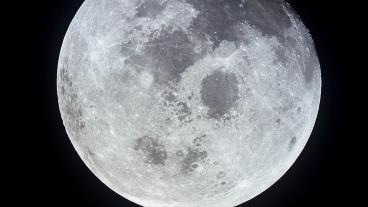
Twin NASA probes orbiting the moon have generated the highest resolution gravity field map of any celestial body.

The new map -- created by the Gravity Recovery and Interior Laboratory (GRAIL) mission -- of which Mines Professor Jeff Andrews-Hanna is a guest scientist -- is allowing scientists to learn about the moon's internal structure and composition in unprecedented detail. Data from the two washing machine-sized spacecraft also will provide a better understanding of how Earth and other rocky planets in the solar system formed and evolved.

The gravity field map reveals an abundance of features never before seen in detail, such as tectonic structures, volcanic landforms, basin rings, crater central peaks, and numerous simple, bowl-shaped craters. Data also show the moon's gravity field is unlike that of any terrestrial planet in our solar system.

These are the first scientific results from the prime phase of the mission, and they are published in three papers in the journal Science.

The news announced Dec. 5 at the annual meeting of the American Geophysical Union was immediately picked up by numerous news media:

Time

The Guardian

MSNBC

Science

BBC

For more information about the GRAIL mission and its findings, click here.


Take a look at a solar panel on a sunny Colorado day and, if you’re like most people, you won’t see much more than a blinding glare. Mark Lusk sees wasted opportunity.

“I see that glare and feel how hot the panels on my roof get and say, ‘What a waste! We’re losing energy!’” says Lusk, a Mines physics professor and solar energy researcher, who admits to checking out his panels and their energy output more than most. On a clear day, he explains, only a fraction of the photons hitting the photovoltaic cells on his roof are converted into electricity—the rest bounce off as light or are lost as heat. On a cloudy day, or as dusk approaches, the long-wavelength, low-energy particles of light are scarcely enough to produce any juice at all. On average, just 20 percent of the sun’s rays actually get converted to energy in a contemporary solar cell.

“In terms of efficiency, there is a lot of room for improvement up there,” he says.

Fueled by a six-year, $12 million grant from the National Science Foundation, Lusk and his colleagues at the Renewable Energy Materials Research Science and Engineering Center (REMRSEC) have spent the last four years working to improve that efficiency via a complex merging of nanotechnology, quantum physics and computational wizardry known as “exciton engineering.”

The nascent and controversial field hinges on the manipulation of “excitons”—the combination of an excited electron and the hole from which it is dislodged by an incoming photon. In conventional photovoltaic cells, the exchange is generally one-for-one; upon impact, a photon creates an exciton, which sends a highly energized electron racing into an electrical circuit.

Continue reading in Mines Magazine...


Learn more about Mines research in renewable energy here.

When Kevin Moore was a young associate professor at Idaho State University, he used to wear a tie to off-campus research team meetings. One day a colleague asked, “Kevin, why do you always wear a tie to these meetings?” Someone joked, “That’s because he wants to be a dean someday.”

The prediction came true on January 3, 2012, when Moore was officially named dean of Mines’ College of Engineering and Computational Sciences, a position he had been filling on an interim basis since the college was formed last summer. While Moore’s long-ago colleague might be surprised to learn the accuracy of his prediction, those at Mines who know him well see it as a natural fit.

“I can send an email to Kevin at any time of the day or night, and it is rare not to get a reply—and a follow-up set of questions—within about 5 minutes,” says Provost and Executive Vice President Terry Parker, who describes Moore as a strategic thinker with strong management skills and a broad understanding of academic disciplines.

A member of the former Engineering Division’s Executive Committee, Moore simply says that when the job came up, “I was a logical choice for the interim slot—I had actually been paying attention. It wasn’t until after a few months that I realized, ‘I can do this job.’”

His career certainly includes the requisite experience. Prior to becoming the G.A. Dobelman Distinguished Chair in Engineering at Mines in 2005, he was a senior scientist at Johns Hopkins University’s Applied Physics Laboratory. Before that, he was a professor of electrical and computer engineering at Utah State University, where he directed several multidisciplinary teams on autonomous robot development. In the mid-’90s, he spent a year serving as interim associate dean of the College of Engineering at Idaho State University. Along the way, he authored three books, more than three-dozen refereed journal articles, and over 100 peer-reviewed conference papers.

Continue reading on Mines Magazine.

In the lobby of the Green Center at Mines, a nicely dressed graduate student described fatigue tests for wind turbine blades while pointing at a large poster filled with colorful diagrams. Nearby another student explained carbon isotope chemostratigraphy of the Niobrara shale formation. Another analyzed the geochemistry of a volcanic hydrothermal system at Mount Spurr, Alaska.

Held in March, the occasion was the 2012 Conference on Earth Energy Research (CEER), one of the largest events sponsored by the Colorado School of Mines Graduate Student Association (GSA).

“As graduate students, one of the things we’re really focused on is making sure the novel ideas and research we work on are discussed collaboratively in the public domain,” said Chemical Engineering Graduate Student Zach Aman, president of the GSA, co-coordinator of CEER and a recent recipient of a Best Student Poster Award at the Gordon Research Conference on Natural Gas Hydrate Systems.

CEER brought in over 160 participants from around the nation to share new ideas on earth and energy issues. Eighty judges, comprised of faculty, alumni and industry representatives judged the presentations in real-time using custom-designed software on an iPad or laptop — a first for graduate research conferences in the U.S.  

The judges evaluated not only scientific merit, but how well the grad students communicated their work.

“It’s about understanding your audience, communicating at the level of your audience, and being able to discuss your research regardless who you’re talking to,” said Cericia Martinez, vice president of the graduate student association and CEER conference chair.

CEER presents just one example of the bold leadership of Mines graduate students. Mines’ GSA continues to set standards for graduate student associations nationally — it is one of the most independent, well-funded graduate student groups in the nation. This allows the group to offer travel grants for students to attend conferences, bring interdisciplinary lectures to campus and assist graduate students who have lost funding. Through a partnership with the Colorado School of Mines Alumni Association, GSA’s graduate continuance fellowship provides $5,000 in tuition and $4,000 in living expense assistance. It’s a first of its kind in the U.S.

“We are very proud of the fact that, as compared to many universities around the country, the GSA at Mines gets tremendous support from both the students and the faculty. We have a very strong and well-defined graduate structure,” said Aman. “Because of this, we are able to offer innovative, cutting-edge programs to address the needs of this graduate population.”

This article appears in the 2012-13 issue of Energy and the Earth magazine.

Sit down and talk with Mines undergraduate student Paul Levi Miller and you will notice right away he is very enthusiastic about science.

“I like science a lot, but I also like science that can help people,” said Miller, a senior engineering physics major. “Renewable energy will solve a lot of our problems at a very fundamental level.”

As an undergrad, Miller is working directly on game changing research. Together with Physics Professor Reuben Collins, he studies nano crystalline silicon, a material of particular interest to scientists for its potential to improve solar cell efficiency by preventing energy from being wasted to heat “just by taking advantage of energy that is already interacting with these materials.”

Miller’s undergraduate research began when he was a sophomore and participated in a National Science Foundation funded Research Experience for Undergrads (REU) program at Mines’ Renewable Energy Materials Research Science and Engineering Center (REMRSEC). It was a 10-week summer session allowing him to direct his own research project for the first time.

“I started from not really knowing how research worked to actually becoming a researcher who is pretty self-sufficient, who could come up with questions and figure out ways to answer them. And that’s really what research is all about,” he said.

The experience was a springboard to other opportunities, approaching professors to participate in their research projects and even working on a paper currently under review to be published in Nature.

Miller’s experience underscores an aspect of the institutional culture of Mines where professors and research projects are accessible and an undergraduate’s experience can be determined simply by initiative and desire to get involved in on-going scientific study.

Miller said his undergraduate research experience put him in a different league when applying to graduate schools — he was accepted to all four of the schools to which he applied. He plans to attend the University of California, Santa Barbara.

This article appears in the 2012-13 issue of Energy and the Earth magazine.

This portable fire extinguisher is lightweight, inexpensive, non-toxic, recyclable, uses water more efficiently and is less damaging to structures and electronics than a typical sprinkler system. 

“From the outset Mines has been a leader in water mist technology, the basis of this chemical-free fire suppression system,” explained Angel Abbud-Madrid, director of the university’s Center for Space Resources.  He directed its initial development in collaboration with NASA. In early 2012 the extinguisher passed the System Requirements Review at Johnson Space Center.

From now on, all design and testing work are aimed at delivering a new fire suppression system for the International Space Station (ISS) by the end of 2013. Mines researchers will help with unit design and will conduct testing on campus, as well as on NASA’s zero-gravity airplane, to determine the extinguisher’s optimum configuration  to put out an open fire inside an ISS module.

They are working with ADA Technologies, Inc. on product development and with Wyle Integrated Science and Engineering under NASA’s bioastronautics contract  to build 13 units that will replace the existing CO₂ extinguishers on the ISS. The new units must fit in the same space as the old ones.

Once the installation on the ISS is complete, the technology can move from spacecraft to commercial applications for a broader market. Possibilities include civil aircraft, passenger ships, military vehicles, subway systems and tunnels, museums and historical sites, health care facilities and computer rooms.


This article appears in the 2012-13 issue of Energy and the Earth magazine.

A smile sets in on Dr. Ramona Graves’ face as she gazes through the soaring panels of glass in the nearly finished lobby of Marquez Hall, the smell of fresh paint permeating as an electric saw whines from a distant hallway.

Dr. Ramona Graves“It just feels special,” she says.

Soon this lobby will bustle with returning students as the future home of the Petroleum Engineering Department at Colorado School of Mines opens its doors for the fall 2012 semester.

It is an impressive, modern facility. German terra cotta panels run its perimeter before slipping through sheets of glass and continuing inside, seeming to connect the outdoors with the indoors. Sunlight enters classrooms from windows that capture the surrounding geology of Golden. Black Italian tile embellishes the restrooms. Enormous glass walls suspended from a wing-like steel vestibule encase the lobby.

“It’s something all of our alumni and donors should take great pride in,” said Graves, who heads the Petroleum Engineering Department at Mines. “Our department has always been one of the best. To have one of the most state-of-the-art buildings is only fitting.”

The high level of finish in Marquez Hall (pronounced “Marcus”) is a testament to the generosity of the Mines community. After an historic $10 million challenge grant from Tim ’80 and Bernadette Marquez in 2005, nearly 200 alumni, friends and corporate partners donated to the project. In addition to housing the Petroleum Engineering Department, Marquez Hall boasts 23,600 square feet of much-needed classroom space for use by the entire campus. Student fees helped to make this valuable addition to the building possible.

“The alumni are appreciative of the education they got out here. Their companies love our graduates, they hire them,” said Graves. “Because of this we’ve been able to do some really great things.”

With new state-of-the-art facilities, Graves said the department can continue that trajectory of success.

One of those facilities is the 3D visualization lab, a large room with theater style seating where students wear 3D glasses and can virtually fly through petroleum reservoirs.

“Petroleum engineers work one mile, five miles, maybe even ten miles into the ground. We can’t see where we work,” said Graves. “When students can actually plan a well, step back and see where it’s actually going to go, see how it’s actually going to intersect the geology, that’s huge.”

Roughly 64,000 square feet of computer classrooms, laboratories, research centers, and informal gathering areas were designed with students in mind. Water bottle filling stations dot the hallways. Desks feature multiple plug-ins. Study areas have large tables and frosted glass that can be written on with dry erase markers. 

“We’re recognizing that the informal study space is actually very valuable space,” said Mike Bowker, associate director of Mines Capital Planning and Construction.

Marquez Hall is also a model of efficiency, attaining a LEED Silver certification. Typically laboratories waste massive amounts of energy in air handling. However, the designers engineered ventilation with heat recovery coils to return heat from outflowing air in the winter. Air changeover is raised and lowered by a smart system that senses contaminants — if a chemical is spilled in a lab the building automatically starts replacing the air in the room.

While this is the Petroleum Engineering Department’s home, the entire campus can make use of Marquez Hall. A southeast wing boasts 23,000 square feet of much-needed classroom space. Outside, a courtyard connects Marquez Hall with the Center for Technology and Learning Media (known as CTLM), which is expected to become a central hub for campus.

“This is going to be just tremendously active. You’re going to have about a thousand students — that’s almost a quarter of the campus — coming through here every hour. So, we spent a lot of time developing this,” said Bowker.

As visitors step in to the west lobby, they immediately start to learn about petroleum engineering.

“Because what we do as petroleum engineers is generally misunderstood, a lot of our galleries and lobbies are designed to educate,” said Graves.

With that aim, students helped design a 16-foot model of an oil reservoir constructed of three curved pieces of glass (in the shape of the Mines triangle). Inside is actual petroleum mixed with water, demonstrating the flow of oil through rock.

“According to the glass manufacturer, it will be the tallest curved glass structure in the world,” said Bowker.

The gallery features an enormous cross-section image of the earth beneath Golden highlighting the geology as described by Dr. Bob Weimer, Professor Emeritus of Geology. Panels detail the petroleum industry as a whole, from exploration to geology to refining.

Construction is nearing completion and Marquez Hall will be open for classes beginning Aug. 21. A formal grand opening ceremony is scheduled for Sept. 28 at 4 p.m. in Jalili Plaza outside the west entrance. A public reception with light refreshments and tours follow from 4:50 to 6 p.m.

Graves couldn’t be more excited.

“I can’t imagine the students coming back to this after having left Alderson Hall. I’m getting goose bumps talking about it,” said Graves.


Click here for a list of major donors to the Marquez Hall building project.

Pages

Subscribe to RSS - Research